
What is your intention?
/“You are the sky, everything else is just the weather.”
~ Pema Chodron
Yoga Update
February 2020

In This Newsletter
Setting & Recommitting to Your Intention
The Power of Yoga to Help Us Align with Our Intentions & Create Positive Change
Manipura Chakra & Tapas
For the Teacher: Using Intention as a Theme
Teaching Schedule & Class Sign-Up
Setting & Recommitting to Your Intention
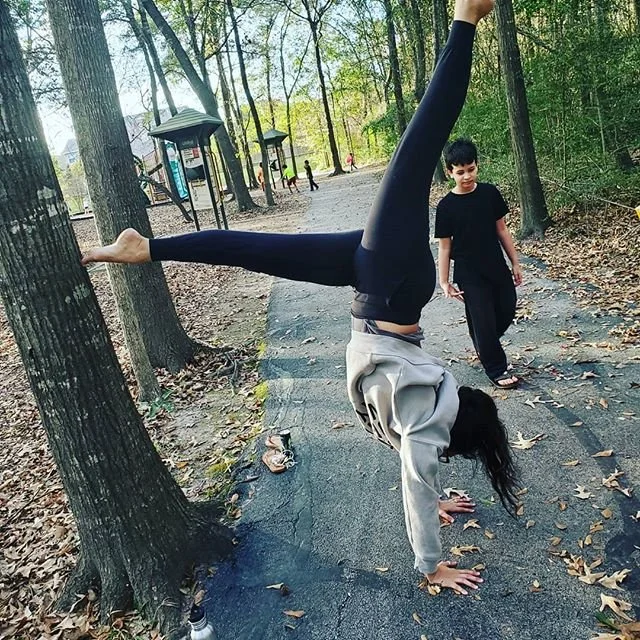
Last month, we embarked on a new year (and my kids pointed out a new decade). Did you take a moment to note what has come before, honor it (as the best you could do at the time, as karma, as a beautiful or difficult experience, or simply as what was)? Did you then fully release it to create space for present moment? We have a habit of rushing through the gate. Even when we accomplish something we are always jumping to the next item on our list. Lucky for us, it is never to late.
Now is a great time to release the past to make room for the present.
Yoga practice gives us the opportunity to set a practice intention, which in turn gives us the experience of coming back to our intention throughout class and feeling the empowerment and peace that comes from directing the mind to align with our values. Let's face it. Sometimes that extra chaturanga is really hard. Or your thinking I can't sit through another 30 seconds of meditation. Yet you can- you can endure any how with a solid why.
Your intention is your why.
Your why doesn't end when you roll up your mat. Your why is always there. Whether is it dealing with stress in a healthier way, losing weight, building strength, having patience- your why is something you carry with you.
So set an intention in the morning. Let it echo through your practice, yes. But also open up yourself to letting it be something you sit with all day. Maybe you take a deep breath and reflect every time to move to a new setting- from home to car to work desk to car to class to home.
And every time life gets hard, challenging, stressful, go back to it.
Put one foot in front of the other.
You can do this.
Here are some ideas to inspire you in setting your intention. Pause, do a few rounds of a simple breath practice, and then feel into an intention that is resonant for you.
Accept what is
Accept myself
Honor and love my body
Stay aware of sensation in the body
Return to the present moment
Return to mindfulness of thoughts
Practice breathing fundamentals
Be mindful of my breath
Return to gratitude
Practice forgiveness
Find the joy
Release thoughts and anything that doesn't serve me
Stay "awake" during transitions
Step outside my comfort zone
Explore equanimity
Embrace impermanence
Feel connection with the earth
The Power of Yoga to Help Us Align with Our Intentions & Create Positive Change
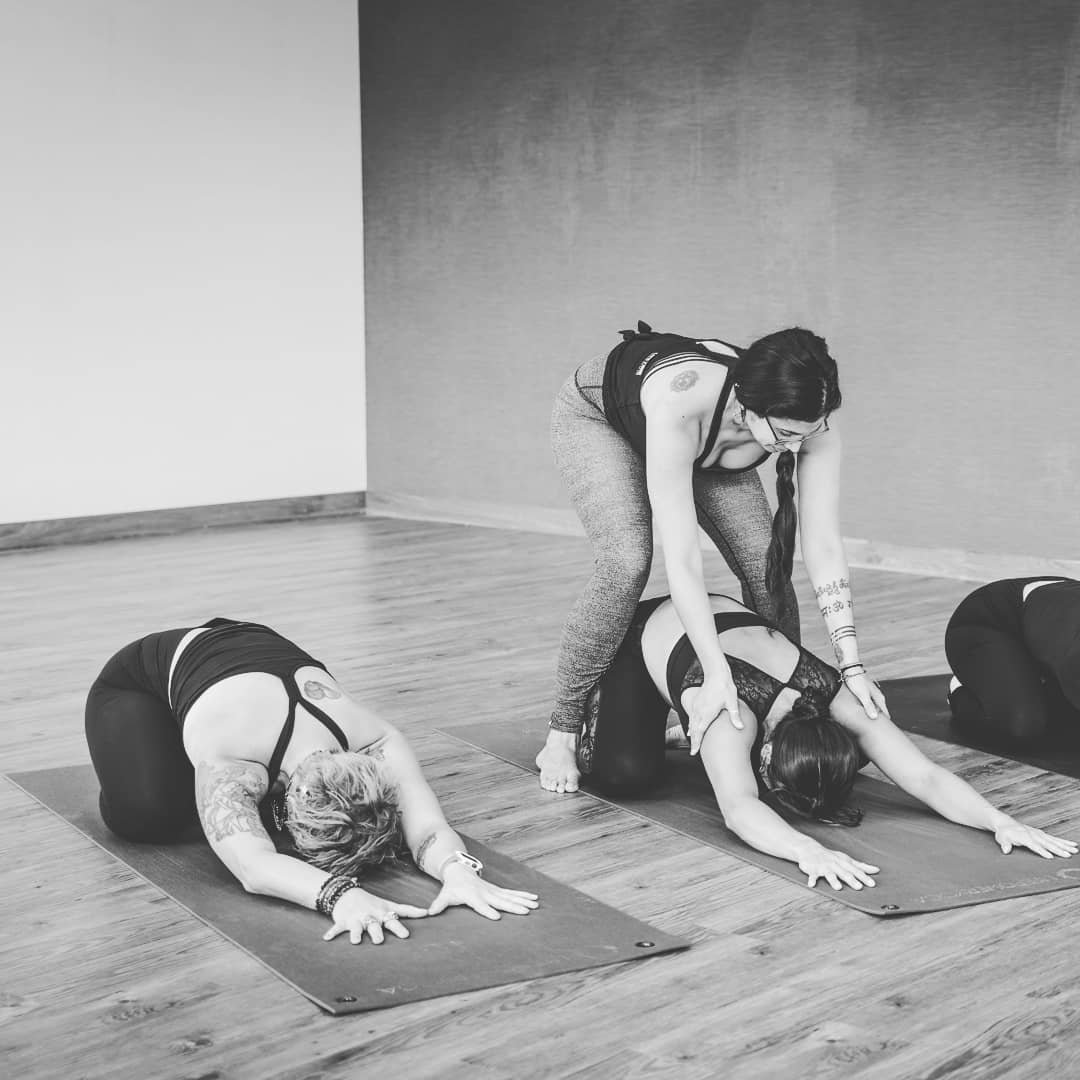
“Our minds love to linger in the past and jump ahead to the future; resolutions only help encourage that behavior. They are always related to a fear from a conditioned past or a worry about the future,” says Bhardwaj, who wrote the book Break the Norms: Questioning Everything You Think You Think You Know About God and Truth, Life and Death, Love and Sex.
This is not living life in the moment, but constantly being pushed from past to future and back again. Break the pattern, and set your intention.
The beauty of intention is that it is supposed to be brought back into focus consistently. When your mind wavers, compassionately redirect.
No shame, judgement, or regret. Just a reaffirmation of your why-
One foot goes back in front of the other.
All the sudden you are back on the path.
Yoga offers numerous philosophical teachings and practice techniques to help you to continuously realign with your intention and achieve positive transformation.
For example, you can consider the chakra model of human energy and restoring balance to the mainpura chakra, including the practice of core strengthening exercises. Other philosophical support can be found in Kriya Yoga and The Eight-Limbed Path, including the third niyama, tapas.
A key for all of us is the need to balance the nervous system. Yoga offers many techniques (such as breathing practices, Restorative Yoga, Yin Yoga, chanting mantras and so on) that enable us to feel the tangible effects of a healthy and balanced nervous system.
Manipura Chakra


Manipura is the center of dynamism, energy, willpower and achievement and it is often compared to the dazzling heat and power of the sun, without which life on earth would not exist.
In the same way that the sun continually radiates energy to the planets, manipura chakra radiates and distributes pranic energy throughout the entire human framework, regulating and energizing the various activities of organs, systems and processes of life.
– Swami Satyananda Saraswati
The third chakra is associated with willpower and self-esteem.
“From here stems your ability to set strong yet flexible boundaries, to act and to adjust: all change and personal growth begins here. The way in which you use the energy of this chakra manifests in your ability to change yourself and your situation in life.” (Swami Saradananda, Chakra Meditation 2008 p 69)
“According to the Buddhist tradition and many of the tantric texts, the actual awakening of kundalini takes place from manipura and not from muladhara. Muladhara is the seat of kundalini, svadhisthana is the abode, and the awakening takes place in manipura…Up to this point, kundalini may awaken and arise many times, only to recede again, but awakening of manipura is what we call a confirmed awakening.” (Swami Satyananda Saraswati, Kundalini Tantra 1984 p 158)
“When deficient, manipura chakra is more like the glowing embers of a dying fire rather than a powerful intense blaze. In this state the individual is rendered lifeless, vitality deficient and devoid of energy. She will be hindered by poor health, depression and lack of motivation and commitment in life. Therefore, the awakening of manipura is an important precedent for anyone who wishes to enjoy life more fully.” (Swami Satyananda Saraswati)
Tapas
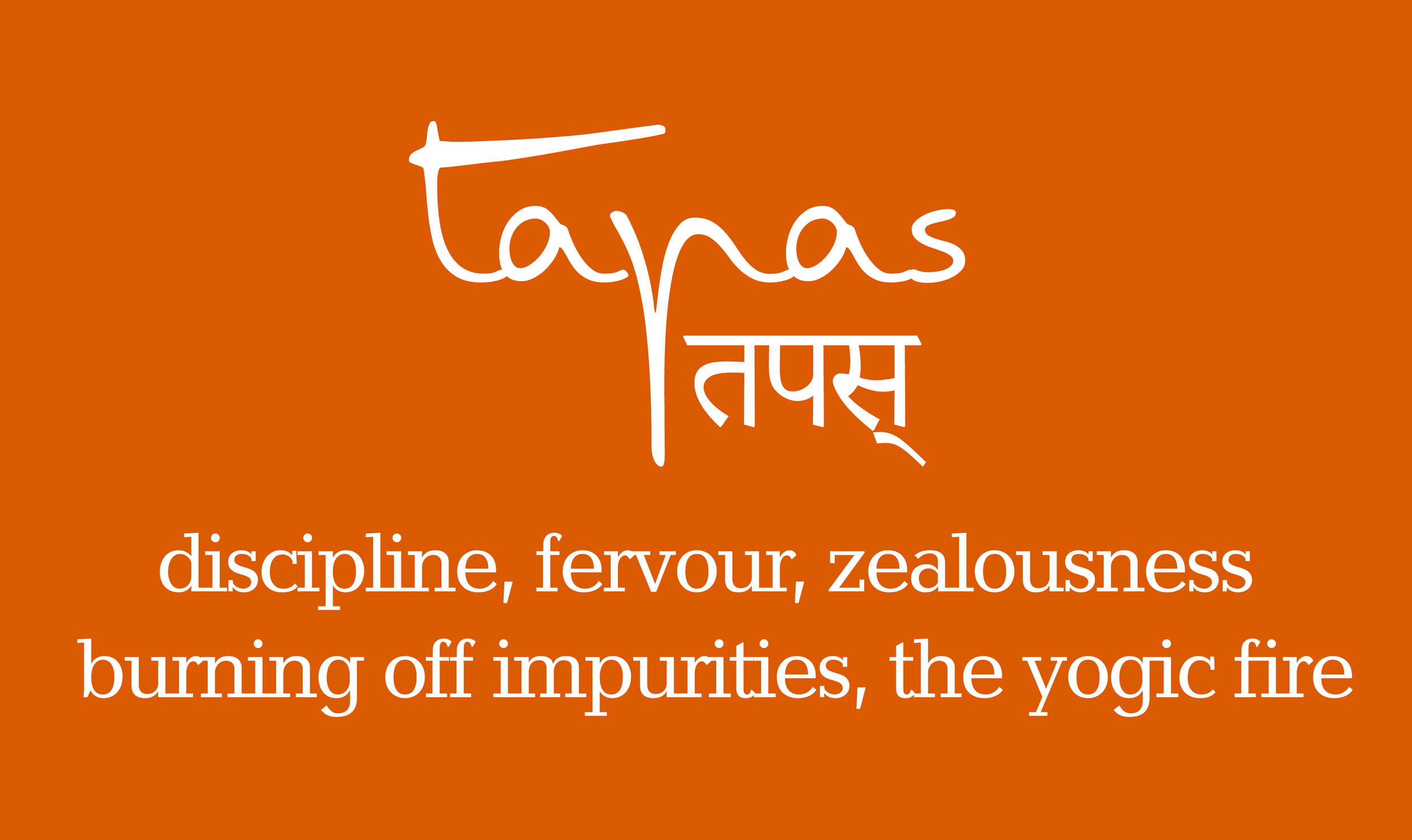
Real and permanent change in behavior creates heat from the friction of a new, positive pattern rubbing up against an old, negative one. This priceless heat of discomfort is the result of tapas. It can arise while we are exercising (such as during yoga asana), breaking an old habit, changing our direction in life, or doing any other activity that causes positive change. The heat generated by practicing tapas will incinerate physical, mental, and emotional impurities, and refine the body, sensory organs,and heart-mind.
– Nicolai Bachman
The Path of the Yoga Sutras 2011
Tapas, the third niyama, is described in Yoga Sutra 2.43. There are numerous translations of the original Sanskrit, including:
The removal of impurities allows the body to function more efficiently. – T.K.V. Desikachar
By practicing austerities, impurities are destroyed and there comes perfection in the body and sense organs. – Swami Satyananda Saraswati
Living life with zeal and sincerity, the purifying flame is ignited (Tapas), revealing the inner light. – Nischala Joy Devi
Through self discipline (tapas), mental impurities are destroyed and the body and senses take on supernatural powers. – AshtangaYoga.info
The heart of the teaching is that by employing enthusiasm, zeal, effort and self-discipline, we burn off impurities and gain courage, wisdom and integrity.
"Life without tapas is like a heart without love.” – BKS Iyengar
Much of practicing tapas is developing the art of discernment, determining which of our daily commitments supports the general direction of our evolutionary track and which ones do not. As with the other yamas and niyamas, moderation supports healthy practice. Practicing tapas should not turn us into automatons for yoga. Being monomaniacal about practice is not healthy. Rather, we learn to live with our most compelling priorities in mind, even as we allow ourselves the freedom to explore occasional diversions.
– Charlotte Bell
Mindful Yoga, Mindful Life 2007
Yoga Teacher: Using Intention as a Theme
Start with definitions to draw inspiration:
Intention: 1. a thing intended; an aim or plan. 2. healing process of a wound
Resolution: 1. a firm decision to do or not to do something. 2. the quality of being determined or resolute.
Look up some quotes:
"Our intention creates our reality" - Wayne Dyer
"Live less out of habit and more out of intent"- anonoymous
"When your why is big enough you will find your how" -anonoymous
“He who has a why to live for can bear almost any how.” ― Friedrich Nietzsche
"Every day, think as you wake up: Today I am fortunate to have woken up.
I am alive, I have a precious human life. I am not going to waste it."- The Dalai Lama
Find a study:
"Intention is the human ability to redirect the electricity in your brain instead of just letting it flow down the path of least resistance. Animals don’t do this. The world reaches their senses and electricity flows into paths paved by past experience. We humans can notice that flow and divert it.:" - Living with Intention article
Then drop bits and pieces into class.
Ask them to move with mindfulness/an intention of being present instead of out of habit. Many times in a vinyasa class you will say exhale high to low plank, inhale up dog, exhale down dog. So shift and say exhale high to low, inhale back to high, exhale down dog.
Or if you always start with the right leg, start with the left.
Stepping out of your habitual patterns as a student (and a teacher) will force them (and you) to be more present.
Have them reflect on why they walked into class early on- then encourage them to reflect back when things get a little more difficult. Whether it be a long holding yin pose or a Manipura chakra stimulating boat pose held extra long.
Seal class with love and light and maybe the Dali Lama quote above, not to waste this day that was given. That their intention can echo out across their day, their month, their year. Their why can give them the strength to push paste any challenge on the mat or off.

My intention for 2020: Letting go of SELF LIMITING beliefs while maintaining SELF CARE.
I feel like I limit what I can achieve and I fear my own success. This year I make the intention to not clip my wings. I'm also committing to myself to honor my natural rhythms on and off the mat. To back off when I need to rest, and to push harder when I know I can.
What is your intent? And how can I help? xoxo